


Natural vs Artificial Ingredients in Electrolyte Drink Mix: Does It Actually Matter for Performance?

A pattern emerges repeatedly across race results and athlete feedback: training goes perfectly for months using one electrolyte drink mix, then race week arrives with free samples of a new "improved" formula from the same brand.
The new version has artificial sweeteners instead of natural sugars. Same electrolytes, zero calories, even better taste. Why not use it for the race? It's the same brand, just improved.
Mile 12, the stomach starts rebelling. By mile 15, cramping and nausea force a dramatic slowdown. Mile 18 becomes a walk. The race doesn't get finished.
What changed? Not the training. Not the pacing. Not the weather. Just one variable: artificial sweeteners in the electrolyte drink mix that the gut couldn't tolerate under race stress.
This pattern repeats constantly. Athletes switch to a "better" formula with artificial ingredients and discover during their most important efforts that their bodies reject what seemed fine sitting on the couch.
Bill Gookin learned this lesson early in his 25 years of formula testing. Natural ingredients weren't a marketing decision. They were a performance decision based on what worked reliably when athletes were suffering at mile 20, hour 8, or lap 95.
After 50 years of real world use, the data is clear: natural ingredients in electrolyte drink mix reduce the variables that can sabotage performance during hard efforts when your gut is already under stress.
This isn't about being "clean" or "healthy" or jumping on wellness trends. It's about reliability when it matters most.
Bill's Philosophy: Nothing Your Body Doesn't Need
Bill Gookin was a biochemist. He could have created incredibly complex formulations with dozens of ingredients, proprietary blends, and cutting-edge additives. His background gave him the knowledge to formulate anything.
Instead, he went radically simple: glucose and fructose for carbohydrates, sodium chloride and potassium chloride for primary electrolytes, trace minerals for completeness, natural fruit flavoring. Nothing else.
No artificial sweeteners. No artificial colors. No proprietary "absorption technology." No unnecessary additives.
This wasn't laziness or lack of sophistication. It was intentional minimalism based on decades of testing showing that adding more ingredients didn't improve performance but did increase the chance of something causing problems.
Bill's reasoning was straightforward: "When you're at mile 22 of a marathon and your stomach is deciding whether to cooperate, you want the fewest possible variables that could trigger rebellion."
Athletes under stress have compromised digestive systems. Blood flow is diverted from the gut to working muscles. Mechanical stress from bouncing puts pressure on the stomach and intestines. Core temperature is elevated. The parasympathetic nervous system (which controls digestion) is suppressed.
In these conditions, your body barely tolerates what you're consuming. Adding artificial ingredients that serve no functional purpose just increases the risk that something triggers GI distress.
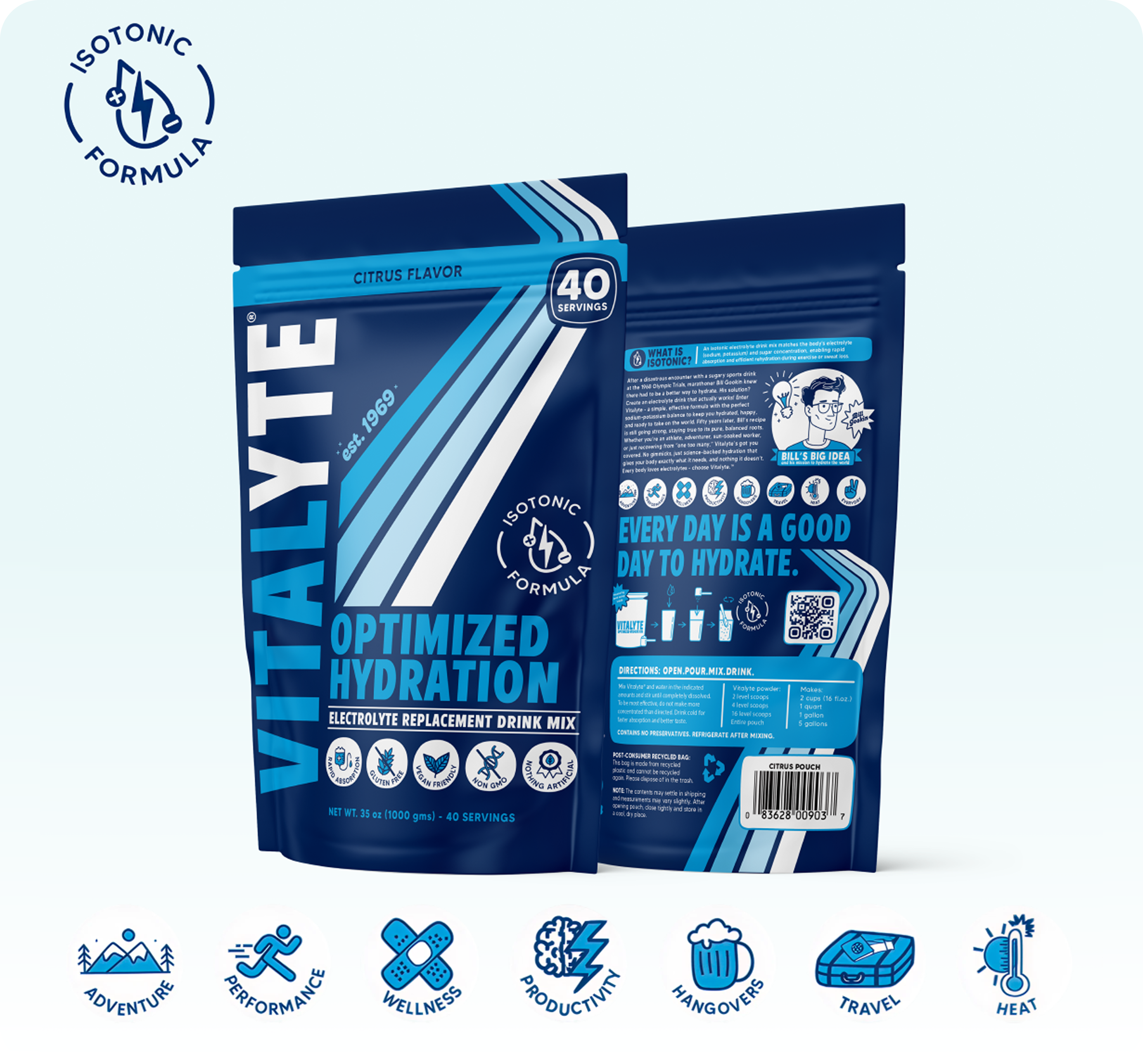
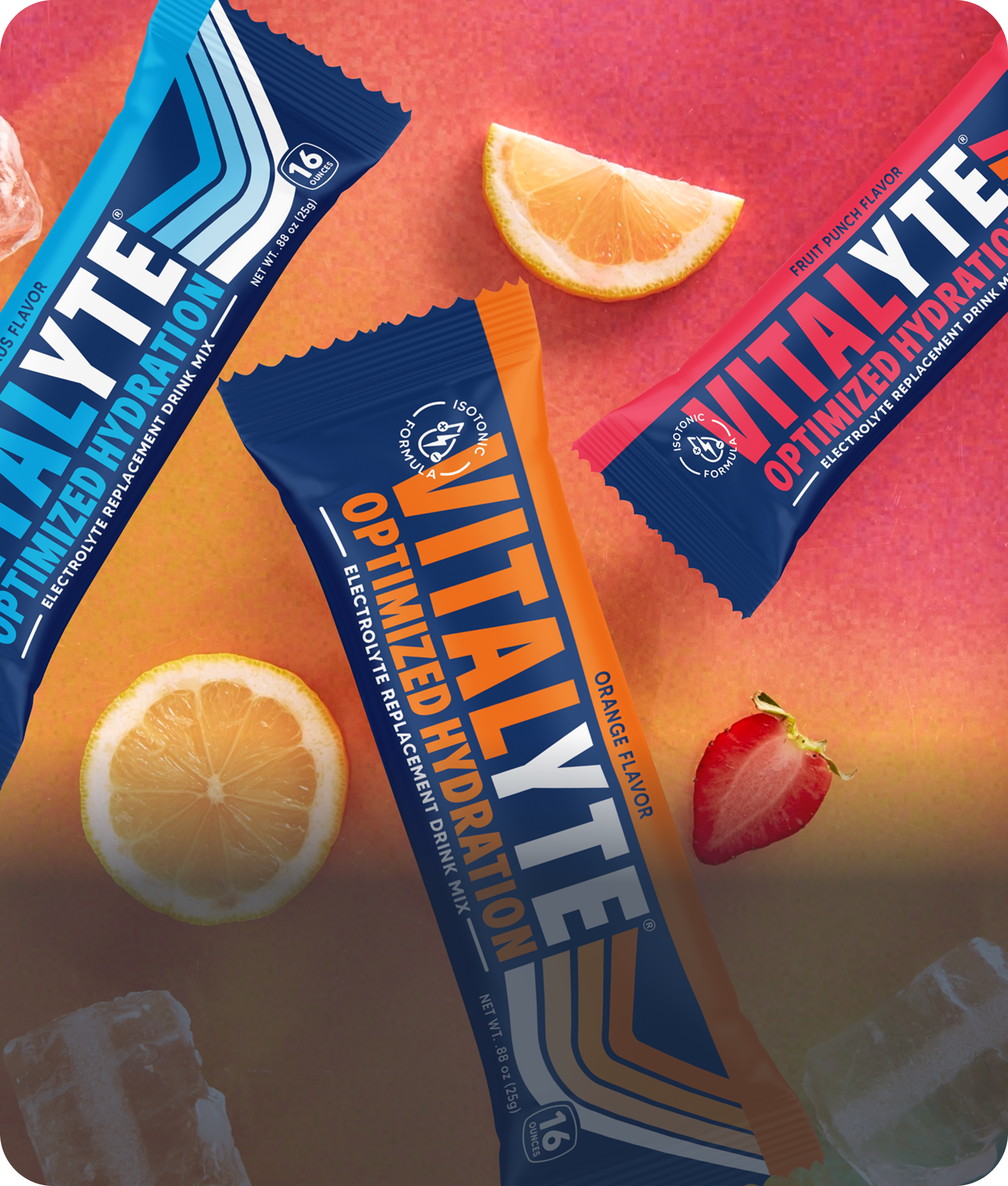
The formulation Vitalyte uses today is essentially unchanged from what Bill perfected in the 1970s because it works reliably across the widest range of athletes and conditions. Not because it's trendy. Because it's functional.

Artificial Sweeteners: The GI Wildcard During Exercise
The biggest difference between "natural" and "artificial" electrolyte drink mixes comes down to sweeteners. This is where performance implications become significant.
Common artificial sweeteners in electrolyte drink mixes:
Sucralose (Splenda) Acesulfame potassium (Ace-K) Aspartame Stevia (technically natural, but highly processed)
These create ultra-sweet, zero-calorie drinks that taste amazing. For casual sipping throughout the day, many people tolerate them fine. But during intense exercise, the story changes.
The Research on Artificial Sweeteners and GI Function
Studies on artificial sweetener consumption show mixed results on GI tolerance, with significant individual variation. Some people experience no issues. Others report bloating, cramping, and diarrhea, especially at higher doses.
During exercise, these effects can be amplified. Your gut is already under stress. Artificial sweeteners can alter gut motility, affect intestinal permeability, and trigger osmotic effects that pull water into the intestines (similar to hypertonic concentration issues).
The challenge: you won't know if you're sensitive until you're stressed. What works fine during easy training might fail catastrophically during a goal race when intensity, duration, and heat stress are all elevated simultaneously.
Bill's Testing Revealed the Pattern
In the 1980s and early 1990s, Bill tested formulations with artificial sweeteners. Not because he thought they'd work better, but because athletes kept asking if he could make a zero-calorie version or improve the taste with artificial sweetening.
The feedback was consistent: some athletes tolerated artificial sweeteners fine in training. But during long, intense efforts (marathons, ultras, century rides), GI complaints increased significantly compared to the natural formula.
The pattern wasn't universal. Maybe 20 to 30% of athletes reported problems. But that's 1 in 3 to 1 in 5 people who would potentially DNF or perform suboptimally because of an ingredient that served no functional purpose beyond taste.
Bill's decision: stick with natural. Glucose and fructose provide both sweetness and actual fuel. No need for artificial sweeteners that add risk without functional benefit.
When Zero-Calorie Makes Sense
To be fair, there are legitimate use cases for artificial sweeteners in electrolyte drink mix:
Short workouts under 60 minutes: If you don't need carbohydrate fuel, zero-calorie formulas work fine. Your gut isn't under prolonged stress, and you're not relying on the drink for sustained energy.
Daily hydration throughout the day: Casual sipping at your desk or between activities doesn't stress your GI system the way exercise does. Artificial sweeteners are generally fine in this context for most people.
Specific dietary restrictions: Some athletes need to minimize carbohydrate intake for medical reasons (diabetes management, certain therapeutic diets). For them, artificial sweeteners provide palatability without glucose.
Keto/carnivore diets: Strict low-carb dieters avoiding all sugar need artificial sweeteners or extremely high tolerance for unsweetened, salty drinks.
But for endurance athletes needing both hydration and fuel during efforts lasting 60+ minutes, natural carbohydrate sources (glucose, fructose, sucrose) provide sweetness plus functional energy without the GI wildcard that artificial sweeteners introduce.

 Natural Flavoring vs Artificial: Less Clear-Cut
The "natural flavoring" versus "artificial flavoring" debate is murkier than the sweetener discussion. Both can be chemically identical. Both are processed. The difference is primarily the source material.
Natural flavoring: Derived from plant or animal sources. A natural lemon flavor comes from actual lemons, though it's extracted and concentrated through industrial processes.
Artificial flavoring: Created through chemical synthesis to mimic natural flavors. An artificial lemon flavor is designed to taste like lemon but isn't derived from lemons.
Chemically, they can be identical compounds. The vanilla flavor in "natural" vanilla extract (vanillin) is the same molecule whether extracted from vanilla beans or synthesized in a lab.
Does the Distinction Matter for Performance?
The honest answer: probably not much, but natural flavoring eliminates a potential variable.
Research on flavoring compounds and athletic performance is limited, with most studies finding no significant difference in absorption or performance between natural and artificial flavoring at typical concentrations used in electrolyte drink mixes.
But some athletes report that certain artificial flavors (especially in high concentrations) become cloying or nauseating during long efforts. The artificial "fruitiness" that tastes great for the first hour can trigger aversion by hour 4 or 5.
Natural fruit flavors tend to be less intense, more subtle, and less likely to trigger flavor fatigue. This isn't about absorption or chemistry. It's about whether you can keep drinking the formula mile after mile without your taste buds rebelling.
Bill's approach: use natural fruit extracts at moderate concentrations. The goal isn't to create the most delicious drink on the shelf. It's to create something pleasant enough that athletes will drink it consistently throughout long efforts without flavor fatigue.
When "Natural" Is Just Marketing
The natural ingredients movement has spawned plenty of greenwashing. Brands slap "natural" on labels while formulating products that are heavily processed, nutritionally questionable, or functionally inferior.
Marketing red flags:
"Natural" drinks with 30+ ingredients (simple is usually better) "Clean label" products that cost 3x more without performance benefits "Organic electrolytes" (minerals are minerals regardless of organic certification) "Plant-based hydration" as if sodium chloride cares whether it came from sea salt or table salt Proprietary "natural absorption technology" that's just rebranded ORS science
Natural ingredients matter when they improve function or reduce problems. They don't matter when they're just marketing positioning for premium pricing.
What Actually Qualifies as "Better Natural"
For electrolyte drink mix, natural advantages come from:
Real fruit extracts for flavoring: Provide subtle, less cloying taste that doesn't fatigue during long efforts.
Natural carbohydrate sources (glucose, fructose, sucrose): Deliver both sweetness and functional fuel through proven metabolic pathways.
Minimal ingredient lists: Fewer ingredients mean fewer variables that could cause problems under stress.
No artificial sweeteners: Eliminates GI wildcards that affect some athletes during hard efforts.
No artificial colors: Serve zero functional purpose and are unnecessary variables.
That's it. You don't need "organic electrolytes" or "plant-based minerals" or other wellness-marketed concepts that don't improve athletic performance.
Glucose + Fructose: The Dual Transporter Advantage
One area where ingredient choice genuinely affects performance is carbohydrate type. This isn't about natural versus artificial. It's about optimizing absorption through different intestinal transporters.
Research on carbohydrate absorption during exercise shows that glucose and fructose are absorbed through different intestinal transporters: SGLT1 for glucose and galactose, GLUT5 for fructose. Using both types together allows higher total carbohydrate absorption rates without overwhelming either transport system.
Studies demonstrate that glucose-only drinks max out around 60g carbohydrate absorption per hour. But glucose-fructose blends can achieve 90g per hour or higher by utilizing both transport pathways.
Practical benefits:
Higher sustainable carbohydrate delivery during long efforts Reduced GI distress compared to single-sugar formulas Better energy availability for ultra-endurance events
Bill used both glucose and fructose in his original formula not because he understood SGLT1 and GLUT5 transporters (the research came later), but because his testing showed that dual-sugar formulas caused less stomach distress during long efforts than glucose-only alternatives.
Vitalyte continues using both glucose and fructose specifically because 50 years of athlete feedback confirms what research later proved: dual transporters work better than single sugar sources.
What Actually Matters for Performance
After evaluating natural versus artificial ingredients in electrolyte drink mix, here's what the 50 years of Vitalyte use reveals actually affects performance:
Critical factors (major performance impact):
Isotonic concentration (280 to 300 mOsm/L). More important than any ingredient choice. Wrong concentration sabotages everything else.
Balanced sodium to potassium ratio (1:1 to 1.4:1). Prevents depletion cascade that causes whole-body cramping.
Adequate carbohydrates (4 to 5%). Provides fuel for efforts lasting 60+ minutes. Zero-carb formulas sacrifice performance for dietary preferences.
Dual carbohydrate sources (glucose + fructose). Reduces GI distress and increases absorption capacity compared to single sugars.
Moderate factors (meaningful for some athletes):
No artificial sweeteners. Reduces GI risk during intense efforts for the 20 to 30% of athletes who are sensitive. Less critical for short workouts or casual hydration.
Natural flavoring. Reduces flavor fatigue during long efforts. Less intense, more tolerable mile after mile.
Minimal ingredients. Fewer variables means fewer potential triggers for problems under stress.
Minor factors (minimal performance impact):
Organic certification. Minerals are minerals. Organic doesn't change sodium chloride's function.
Non-GMO labeling. Electrolytes and simple sugars don't meaningfully differ based on GMO source.
Fancy packaging. Zero performance benefit. Often indicates money spent on marketing rather than formulation.
Choose based on the critical factors first. Optimize for moderate factors if you're sensitive or doing long efforts. Ignore minor factors unless they matter to you personally for non-performance reasons.
Common Patterns: Natural vs Artificial Experiences
After 50 years of athletes using Vitalyte's natural formula and comparing experiences with artificial alternatives, certain patterns emerge consistently in athlete feedback.
The Race Day Surprise Pattern
A common scenario involves athletes training their entire buildup using an electrolyte drink mix with artificial sweeteners without any issues during training. Race day arrives, and they switch to a different flavor from the same brand or receive promotional samples of a "new and improved" formula.
The new version uses a different artificial sweetener blend. By the midpoint of the race, the stomach rebels. GI distress forces a dramatic slowdown. What should have been a strong finish becomes a survival effort or even a DNF.
The pattern repeats: athletes switch back to naturally formulated options like Vitalyte's formula and complete similar events without GI issues, often with significantly better finishing times.
The lesson these athletes report: natural ingredients provide consistency and reduce the risk of surprises when stakes are highest.
The Ultra-Distance Flavor Fatigue Pattern
Ultra runners frequently describe a pattern where their usual electrolyte drink mix tastes excellent for the first several hours of an event. The intense artificial fruit flavoring is appealing initially and provides motivation to drink regularly.
After 30 to 40 miles, however, the artificial intensity becomes nauseating. The sweetness that was pleasant earlier triggers aversion. Athletes report forcing themselves to continue drinking, but the taste aversion makes adequate hydration a psychological struggle rather than an automatic habit.
When these same athletes switch to more subtly flavored natural formulas, they report the taste is less exciting initially but crucially doesn't trigger fatigue. They can consume the drink consistently from start to finish without the flavor becoming repulsive.
Performance improves not because the formulation is dramatically different in electrolyte content, but because athletes actually maintain adequate fluid consumption throughout instead of avoiding their drink after several hours.
The Training vs Racing Intensity Pattern
A typical scenario involves athletes using artificial sweetener formulas without issues during moderate-intensity training sessions lasting 2 to 3 hours. Everything seems fine. The formula appears to work perfectly.
Then comes a goal race in challenging conditions: high heat, longer duration, or maximum intensity. The combination of environmental stress, extended effort, and race-pace intensity reveals sensitivity the athlete didn't know existed.
GI cramping begins several hours into the effort. Nausea makes consuming more of the formula impossible. The athlete switches to water only, loses the carbohydrate fuel source, bonks from inadequate energy, and finishes far below potential or doesn't finish at all.
For subsequent events, these athletes report using natural carbohydrate-based formulas exclusively. Under similarly challenging race conditions, their stomachs tolerate the natural sugars throughout the entire effort. They finish strong with significantly better times.
The consistent pattern: what works adequately in training doesn't always work when race intensity, duration, environmental stress, and psychological pressure combine to create maximum physiological demand.
The Bottom Line: Reduce Variables When Stakes Are High
After Bill Gookin's 25 years of testing and 50+ years of athletes using the natural formula he developed, the conclusion is clear: natural ingredients in electrolyte drink mix don't guarantee better performance, but they reduce the variables that can cause problems when your body is under maximum stress.
Artificial sweeteners work fine for some athletes in some conditions. But they're a wildcard. You won't know if you're in the 20 to 30% who experience GI issues during hard efforts until it's too late.
Natural carbohydrate sources (glucose, fructose) provide both sweetness and functional fuel without introducing GI risk factors. Natural flavoring reduces the intensity that can trigger flavor fatigue during ultra-distance efforts. Minimal ingredient lists mean fewer potential triggers.
This isn't about being "clean" or "healthy" or following wellness trends. It's about reliability. When you've trained for 6 months for a goal race, you don't want an unnecessary ingredient sabotaging your performance because a brand prioritized shelf taste over functional simplicity.
Vitalyte's natural ingredient formula isn't a marketing position. It's a performance decision based on what works most reliably for the most athletes across the widest range of conditions over 50 years of real-world testing.
Choose ingredients that serve a functional purpose. Avoid ingredients that add risk without benefit. Test everything in training under conditions matching your goal event. Trust your gut, literally.
Ready to eliminate unnecessary variables with a naturally formulated electrolyte drink mix? Shop Vitalyte's natural isotonic formula
Want to understand all factors in optimal formulation? Read our complete guide to electrolyte powder
Looking for timing strategies? See our athlete's guide to when to drink electrolytes
Comparing Vitalyte's natural formula to other brands? See our honest comparison of major electrolyte drink mixes
Frequently Asked Questions
Are natural ingredients always better than artificial?
Not always. For electrolyte drink mix specifically, natural ingredients reduce GI risks during intense exercise for sensitive athletes (roughly 20 to 30% of users). But if you tolerate artificial sweeteners fine and only do short workouts, the difference is minimal. The advantage emerges during long, intense efforts when your gut is stressed.
Is stevia considered natural or artificial?
Stevia is technically natural (derived from stevia plant leaves), but it's highly processed. Some athletes tolerate it well. Others experience the same GI issues as artificial sweeteners. It's somewhere between truly natural (glucose, fructose) and fully synthetic (sucralose, aspartame). Test it in training if you're considering it for racing.
What about "organic" electrolyte drink mixes?
Organic certification doesn't change how sodium chloride or potassium chloride functions in your body. Minerals are minerals regardless of source. Organic matters more for whole foods where pesticide residues are concerns. For purified electrolytes and simple sugars, it's primarily marketing. Don't pay premium prices for organic electrolytes unless it matters to you for non-performance reasons.
Do artificial colors affect performance?
Research shows minimal performance impact from artificial colors in typical drink concentrations. But they serve zero functional purpose. Why add an unnecessary variable? Natural fruit and vegetable extracts can provide color if you want it, or just skip coloring entirely. Performance doesn't change based on drink color.
Should I avoid all artificial ingredients if I have a sensitive stomach?
If you're prone to GI issues during exercise, eliminating artificial sweeteners is a smart first step. Start with naturally formulated electrolyte drink mixes using glucose and fructose for sweetness. Test thoroughly in training under conditions matching your goal events. If you still have issues, the problem might be concentration or ratios rather than ingredients.
Medical Disclaimer: This article provides general information about ingredients in electrolyte drink mix. It is not medical advice. If you have specific food sensitivities, allergies, or medical conditions, consult healthcare professionals before changing sports nutrition strategies.
About the Author
Evan Lucas, COO of Vitalyte
Evan has been with Vitalyte for 27 years, working to carry forward Bill Gookin's legacy of creating honest, effective hydration solutions. He uses Vitalyte daily for general wellness and hydration, and helps guide the company's commitment to real-world testing and straightforward science over marketing hype.